Progesterone in Men: What Your Level Means
Progesterone is low in men by normal physiology, not by deficiency. No major guideline body publishes a male target range to aim for. Here is what your number means and the narrow set of situations where it is worth investigating.
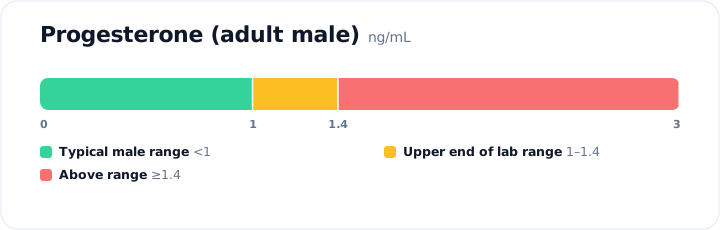
What progesterone measures in men
Progesterone is a steroid hormone produced in men by the adrenal glands and in small amounts by the testes. Its main role in male physiology is as a precursor: the body converts it along the pathways that produce cortisol and androgens. It is not a hormone with an established target level in men.
Why a low result is the expected result
Male progesterone sits at roughly the level seen in women during the follicular phase, which is the low point of the female cycle. A result near the bottom of the reference range is the normal finding. The clinically interesting direction in men is a high result, not a low one.
How to read a male progesterone result
Two things make this marker easy to misread: the reference range is assay-dependent, and the marker most often confused with it answers a different question.
Progesterone is rarely ordered on its own in men. It usually appears because it was bundled into a broad hormone panel, and the result then needs interpreting without a clinical question behind it. That is the situation most people reading this page are in.
A result at or near the bottom of the range needs no action. Male physiology produces little progesterone, and there is no established deficiency state to correct. If a panel flags it as "low" against a range built from mixed-sex data, the flag reflects the range, not your endocrinology.
A result above the laboratory range is the finding worth following up. In men this most often traces to an exogenous source such as a progestin-containing medication, or to human chorionic gonadotropin prescribed alongside testosterone replacement, which stimulates testicular steroid production. Adrenal causes are less common and are investigated with 17-hydroxyprogesterone and cortisol rather than progesterone alone.
If the panel was ordered because of low libido, fatigue, or mood change, the markers that carry established male reference standards will tell you more. Total and free testosterone, SHBG, prolactin, and thyroid function are where those symptoms are usually explained. Our guide to blood tests for low libido covers that workup.
What your progesterone number means
Laboratory ranges vary by assay. Read your result against the range printed on your own report rather than against a number from the internet.
| Progesterone (ng/mL) | Lab classification | Clinical picture | Status |
|---|---|---|---|
| Below 0.2 | At or below assay floor | Normal for men. Many assays cannot resolve below this and report it as a floor value rather than a true measurement. | Normal |
| 0.2–1.0 | Typical adult male range | The expected finding. Comparable to female follicular-phase levels. No action indicated. | Normal |
| 1.0–1.4 | Upper end of most lab ranges | Still within range on most assays. Worth noting if you take a progestin or hCG, otherwise not actionable on its own. | Note |
| Above lab range | Elevated | Uncommon in men. Review medications first, then consider adrenal or testicular causes with 17-OHP, cortisol, LH, and testosterone. | Investigate |
Frequently asked questions
Do men produce progesterone?
What are the symptoms of low progesterone in men?
How do you increase progesterone in men?
What is a normal progesterone level in men?
Is low progesterone in men a problem?
Should men take progesterone supplements?
What causes high progesterone in men?
What is the difference between progesterone and 17-hydroxyprogesterone?
Does progesterone lower testosterone in men?
Symptoms attributed to progesterone in men
These are the symptoms marketed as progesterone-related. Each is non-specific, and each has a better-established explanation worth ruling out first.
What raises progesterone in men
Elevation is the direction worth investigating. Start with what you are taking before investigating your adrenals.
What to do with a progesterone result
For most men reading this, a low result needs no correction on its own. These steps cover what to check, and when it's worth a conversation with your GP.
References & Guidelines
- Endocrine Society — Male Reproductive Endocrinology clinical practice guidance
- Bhasin S et al. Testosterone Therapy in Men With Hypogonadism: An Endocrine Society Clinical Practice Guideline. J Clin Endocrinol Metab. 2018;103(5):1715-1744
- Oettel M, Mukhopadhyay AK. Progesterone: the forgotten hormone in men? Aging Male. 2004;7(3):236-257
- Medscape — Progesterone: Reference Range, Interpretation, Collection and Panels
Not sure which hormone result matters most?
Upload your blood test and FixFirst ranks your hormone markers, alongside 188 others, by what actually needs addressing first for your profile.
Analyze My Blood Test →