CBC blood test: what every result on your complete blood count means

A complete blood count reports 10–15 numbers across three cell types. Most look fine. Here's how to read the ones that matter, and what patterns across markers tell you that individual results don't.
Analyze My CBC Results See a sample analysis
Based on WHO, NICE & BSH guidelines Reads CBC patterns, not just flags Free, no account needed

Why the pattern matters more than any single flag

Flags tell you something is outside the reference range. Patterns tell you why, and what to do about it.

15+
Numbers on a standard CBC report
Most people scan for flags and miss the patterns. It's the combination of MCV + hemoglobin + RDW that tells you what's actually going on with your red cells.
1 in 3
CBC reports with at least one borderline value
Reference ranges are set to catch clear disease. Subclinical iron depletion, early infection, and mild anaemia often hide within the "normal" band.
80%
Of anaemia cases diagnosed by CBC patterns
Anaemia type (iron-deficiency, B12, haemolytic) is identified by the pattern of MCV, RDW, and reticulocytes. not hemoglobin alone.

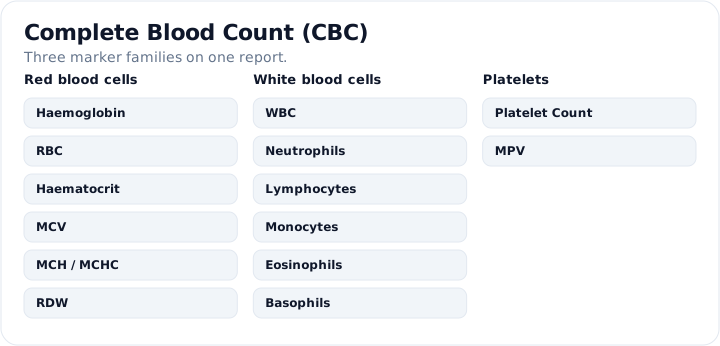
A complete blood count measures three cell lines: red blood cells (which carry oxygen), white blood cells (which fight infection), and platelets (which control clotting). Each has multiple sub-markers that together tell a more complete story than any single number.

Most people focus on whether hemoglobin is in range, and miss what MCV, RDW, and the WBC differential are saying. A hemoglobin of 11.8 g/dL (flagged low) means something very different depending on whether MCV is 65 fL (microcytic, think iron deficiency) or 105 fL (macrocytic, think B12 or folate).

FixFirst's analyzer reads the full CBC pattern, not individual flags. It identifies whether markers cluster into iron deficiency, B12 deficiency, inflammation, or infection patterns, and ranks the most concrete finding first.

Every CBC marker explained

What each number measures, what the reference range means, and what high or low results indicate.

🔴

Red blood cell markers

Hemoglobin (Hgb / Hb)
Women 12.0–16.0 g/dL  ·  Men 13.5–17.5 g/dL
The main oxygen-carrying protein in red blood cells. Low hemoglobin confirms anaemia. The type of anaemia, and its cause, depends on what the other red cell markers show. Hemoglobin alone is the least informative marker on the CBC.
Hematocrit (HCT)
Women 36–46%  ·  Men 41–53%
The percentage of blood volume made up of red cells. Hematocrit mirrors hemoglobin closely, low hematocrit with low hemoglobin confirms anaemia. On its own, it adds little that hemoglobin doesn't already show.
MCV (Mean Corpuscular Volume)
Normal 80–100 fL
Red cell size. This is one of the most diagnostically useful numbers on the CBC. Low MCV (below 80 fL) means red cells are small, microcytic, and points most commonly to iron deficiency or thalassaemia. High MCV (above 100 fL) means cells are enlarged, macrocytic, and points to B12 deficiency, folate deficiency, or alcohol use. Normal MCV with low hemoglobin is normocytic anaemia, consider chronic disease, kidney disease, or haemolysis.
RDW (Red Cell Distribution Width)
Normal 11.5–14.5%
Measures variation in red cell size. High RDW (above 14.5%) means cells vary widely, some large, some small. This pattern appears in early iron deficiency (before MCV even drops), mixed iron-plus-B12 deficiency, and haemolysis. Normal RDW with low MCV points toward thalassaemia rather than iron deficiency, a clinically important distinction.
MCH and MCHC
MCH 27–33 pg  ·  MCHC 32–36 g/dL
Hemoglobin content per cell (MCH) and hemoglobin concentration within cells (MCHC). Low MCH means pale, hemoglobin-poor cells, a pattern seen in iron deficiency alongside low MCV. High MCHC points to spherocytosis, a rare red cell disorder. Both are generally interpreted in combination with MCV rather than in isolation.

White blood cell markers

WBC (Total white cell count)
Normal 4.5–11.0 × 10³/µL
The total count of all white blood cells, your immune system's front line. High WBC (leukocytosis) signals infection, inflammation, physical stress, or steroid use. Low WBC (leukopenia, below 4.0) suggests viral infection, medication suppression, or, if persistent, a bone marrow problem. Total WBC should always be read alongside the differential.
Neutrophils
Normal 40–70% of WBC (1.8–7.7 × 10³/µL absolute)
The primary fighters against bacterial infection. High neutrophils with raised total WBC = bacterial infection or systemic inflammation. Low neutrophils (neutropenia, below 1.5 × 10³/µL absolute) increases infection risk significantly. this can follow severe viral illness, certain medications (carbimazole, chemotherapy, some antibiotics), or autoimmune conditions.
Lymphocytes
Normal 20–40% of WBC (1.0–4.8 × 10³/µL absolute)
The viral immunity specialists. High lymphocytes (lymphocytosis) are the hallmark of viral infection. EBV (glandular fever), CMV, and COVID-19 all raise lymphocyte counts. Low lymphocytes (lymphopenia) can follow acute stress, steroid use, or, if persistently low, indicate HIV or another immune condition requiring investigation.
Monocytes, eosinophils, and basophils
Eosinophils normal below 0.5 × 10³/µL
The rest of the WBC differential. Monocytes are elevated in chronic infection and some inflammatory conditions. Eosinophils are the standout marker here: high eosinophils (eosinophilia) signal allergy, asthma, or, importantly, parasitic infection, and warrant follow-up when above 0.5 × 10³/µL. Basophils rarely have standalone clinical significance at routine levels.
🟡

Platelets

Platelets (PLT)
Normal 150–400 × 10³/µL
Platelets control clotting. Low platelets (thrombocytopenia, below 150) can result from immune destruction (ITP), viral infection (including dengue and EBV), medication effect, or, in severe cases, bone marrow failure. Spontaneous bleeding risk rises meaningfully below 50 × 10³/µL. High platelets (reactive thrombocytosis) most commonly follow iron deficiency or acute infection and resolve once the trigger is treated. Platelet counts above 1,000 × 10³/µL warrant haematology referral to rule out a myeloproliferative disorder.
Iron deficiency can hide on a normal CBC
Ferritin (iron stores) depletes months before hemoglobin drops. A normal CBC does not rule out iron depletion, if RDW is creeping up or MCV is at the low-normal edge, check ferritin separately.
How iron stores deplete before hemoglobin drops

CBC patterns and what they mean

Individual out-of-range values tell you something is off. Patterns across multiple markers tell you what's driving it.

Pattern Key markers Most likely cause Next step
Low Hgb + low MCV + high RDW Hgb low, MCV <80 fL, RDW >14.5% Iron deficiency anaemia Check ferritin, serum iron, TIBC
Low Hgb + high MCV + normal/high RDW Hgb low, MCV >100 fL B12 or folate deficiency Check B12, folate, reticulocytes
Low Hgb + normal MCV + normal RDW Hgb low, MCV 80–100 fL Chronic disease, kidney disease, or haemolysis Check CRP, eGFR, reticulocytes, LDH
Low MCV + borderline Hgb + normal/low RDW MCV <76 fL, Hgb borderline, RDW normal Thalassaemia trait Haemoglobin electrophoresis
High WBC + high neutrophils WBC >11, neutrophils >70% Bacterial infection or inflammation Clinical correlation; repeat if persists
Low WBC + low neutrophils WBC <4.0, neutrophils <40% Viral infection, medication effect Review medications; repeat in 4–6 weeks

FAQ — CBC blood test questions answered

What does a CBC blood test check?
A complete blood count measures three cell lines: red blood cells (hemoglobin, hematocrit, MCV, MCH, MCHC, RDW, RBC count), white blood cells (total WBC plus the differential, neutrophils, lymphocytes, monocytes, eosinophils, basophils), and platelets. The CBC is one of the most ordered blood tests in the world and is used to screen for anaemia, infection, inflammation, clotting disorders, and bone marrow conditions.
What does a low hemoglobin mean?
Low hemoglobin means you have anaemia, your red cells are carrying less oxygen than normal. But anaemia is a finding, not a diagnosis. The type of anaemia and the cause are determined by MCV (cell size), RDW (size variation), and often ferritin, B12, and folate. Iron deficiency anaemia (the most common type) shows low hemoglobin + low MCV + high RDW. B12 deficiency shows low hemoglobin + high MCV. A normal MCV with low hemoglobin usually points to chronic disease or kidney-related anaemia.
What does high MCV mean on a blood test?
MCV above 100 fL means your red blood cells are larger than normal (macrocytic). The most common causes are vitamin B12 deficiency and folate deficiency. Alcohol use is another common cause. it directly affects red cell production in the bone marrow. Less commonly, macrocytosis can result from hypothyroidism, liver disease, or medications (particularly methotrexate, hydroxyurea, or some antiretrovirals). If MCV is elevated, the next test is usually B12 and folate levels.
What does low WBC mean?
Low white blood cell count (leukopenia, below 4.0 × 10³/µL) has several common causes. Viral infections, including influenza and COVID-19 — temporarily lower WBC, particularly lymphocytes. Certain medications (carbimazole, methotrexate, some antibiotics) suppress WBC production. Autoimmune conditions, particularly lupus, can cause persistent low WBC. In most cases, a mildly low WBC in an otherwise well person resolves without treatment; a repeat test in 4–6 weeks is a reasonable first step. Persistently low WBC below 3.0 × 10³/µL warrants haematology referral.
What is RDW on a blood test and what does it mean if it's high?
RDW (red cell distribution width) measures how consistently sized your red cells are. A high RDW (above 14.5%) means cells vary widely in size, some large, some small. This pattern appears in early iron deficiency (before MCV falls significantly), mixed nutritional deficiency (iron + B12), and haemolysis. A high RDW alongside a normal or low MCV is a particularly useful early signal of iron deficiency, ferritin should be checked even if hemoglobin is still within range.
Medical disclaimer: FixFirst is an educational tool, not a medical device. Reference ranges and clinical interpretations in this guide are based on published guidelines including NICE, WHO, and British Society for Haematology standards. Always consult a licensed healthcare provider before making clinical decisions based on your results.

Get your CBC results ranked by priority

Upload your blood test and FixFirst reads the full CBC pattern. not just individual flags, and tells you which finding to address first.

Upload My Blood Report →