Low Ferritin: What It Means and What to Do

Low ferritin causes fatigue, hair loss, and poor recovery — even when your haemoglobin is perfectly normal. Here's where the borderline zone starts, what drives it, and exactly what to do about it.

Check My Ferritin Level See a sample analysis
Based on NICE, NIH & BMJ research 86 markers analysed Free, no account needed

What ferritin is — and why it matters more than haemoglobin

Ferritin is your body's iron warehouse. It depletes long before haemoglobin drops — which is why a normal blood count doesn't rule out iron depletion.

3–6
Months ferritin depletes before haemoglobin
Iron stores empty first. By the time haemoglobin drops, you've been functionally iron-depleted for months. Your CBC stays green throughout.
50
ng/mL — the clinical threshold for fatigue in women
Verdon et al., BMJ 2003: women with ferritin below 50 ng/mL improved with iron supplementation even without anaemia. Many labs flag only below 12–30.
1%
Of your iron circulates in blood
The rest is stored in ferritin — in your liver, spleen, and bone marrow. The serum test measures what's stored, not what's circulating.

Think of ferritin as your body's iron savings account. When iron intake is adequate, ferritin levels stay high. When intake falls short — or losses increase — the body draws down stores before anything shows up in your haemoglobin or CBC.

This is why ferritin is the most sensitive marker of iron status. A haemoglobin of 13.5 g/dL and an MCV of 88 fl can coexist with a ferritin of 12 ng/mL — and the fatigue, hair loss, and poor exercise recovery that comes with it. Your doctor sees a normal blood count. You feel exhausted. Both are true.

The lab's "normal" threshold for ferritin (typically ≥12–30 ng/mL depending on the lab) was set to detect frank iron deficiency anaemia — not to identify the earlier stage where stores are depleted but red blood cells haven't yet been affected. NICE defines this earlier stage (iron depletion) at ferritin below 30 ng/mL. Clinical research finds symptomatic improvement at ferritin below 50 ng/mL in women. Most lab reports flag none of this.

What your ferritin number actually means

The lab's reference range and the clinical evidence don't align — here's how to read your result in context.

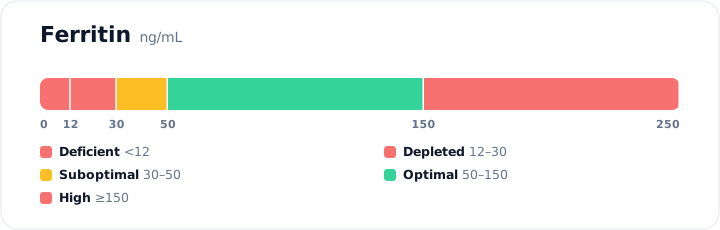
Ferritin level (ng/mL) Lab classification Clinical picture Status
Below 12 Flagged low by most labs Iron deficiency — NICE deficiency threshold. Risk of anaemia. Act now
12–29 Often within lab "normal" Iron depletion (NICE threshold <30). Fatigue, hair loss, poor recovery likely. Address
30–49 Normal on most reports Borderline zone. Symptoms may be present, especially in active women. BMJ 2003 RCT shows improvement with supplementation at this level. Watch
50–150 Normal Adequate stores for most adults. Symptoms unlikely to be ferritin-driven at this level. Adequate
Above 200 Elevated (may be flagged) Can indicate acute inflammation or haemochromatosis. Elevated ferritin is not always "more iron" — rule out inflammatory causes. Investigate
Also feeling tired with "normal" results?
Low ferritin is one of six markers that commonly hide in the normal zone and still cause fatigue. Vitamin D, B12, TSH, magnesium, and fasting glucose follow the same pattern.
See all six markers that labs routinely miss

Symptoms of low ferritin

These symptoms can appear well before ferritin is low enough to trigger a lab flag — especially in pre-menopausal women and endurance athletes.

Persistent fatigue
The most common presentation. Tiredness that sleep doesn't fix — particularly in the afternoon or after exertion. Iron is required for mitochondrial energy production.
Hair shedding
Diffuse hair loss across the scalp rather than patchy loss. Often the most distressing symptom and the one that prompts investigation. Hair follicles are iron-dependent.
Poor exercise recovery
Disproportionate fatigue after training, longer recovery times, or performance plateau — particularly common in endurance athletes with high iron turnover.
Restless legs at night
An uncomfortable urge to move the legs, especially in the evening or at rest. Low ferritin is one of the most well-established modifiable causes of restless legs syndrome.
Brittle nails
Nails that split, break, or develop ridges easily. Koilonychia (spoon-shaped nails) is a classic sign of iron deficiency, though it appears at more severe depletion.
Reduced cold tolerance
Feeling cold more easily than others — particularly in the hands and feet. Iron is involved in thyroid hormone metabolism, and depletion can blunt thermogenic function.

What causes low ferritin

Low ferritin is always a mismatch between iron intake and iron loss or demand. These are the most common reasons.

🩸
Heavy or prolonged menstrual periods
The most common cause of low ferritin in pre-menopausal women. Monthly iron loss can significantly exceed dietary intake, particularly on a low-meat diet. Even periods that feel "normal" can deplete stores over time if iron intake is marginal.
🥗
Low dietary iron — especially plant-based diets
Animal foods contain haem iron, which is absorbed at 15–35%. Plant foods contain non-haem iron, absorbed at 2–20%. Vegetarians and vegans need roughly 1.8× more dietary iron than meat-eaters to maintain the same stores. Phytates in wholegrains and legumes further inhibit absorption.
🏃
Endurance training
High-volume training increases iron losses through sweat, foot-strike haemolysis (red cell destruction from running impact), and inflammation-driven hepcidin production (which blocks iron absorption). Distance runners and triathletes frequently run low.
🔬
Malabsorption — coeliac disease, low stomach acid, IBD
Iron absorption requires adequate stomach acid for conversion to the absorbable form. Coeliac disease damages the duodenum where most iron is absorbed. Inflammatory bowel disease creates ongoing losses. Proton pump inhibitors (PPIs) reduce gastric acid and impair iron uptake.
🩺
Regular blood donation
Each blood donation removes approximately 200–250 mg of iron. For frequent donors, especially women, cumulative losses can deplete ferritin stores between donations — even when haemoglobin checks pass the donation threshold.

What to do about low ferritin

The approach depends on how low ferritin is, what's driving it, and whether haemoglobin is also affected. Here's the evidence-based protocol.

1
Address the cause first
If heavy periods are driving depletion, treating the underlying cause (hormonal options, dietary changes) matters as much as supplementing. If malabsorption is suspected (coeliac, IBD, chronic GI issues), get tested before assuming diet is the only lever. Supplementing onto a malabsorption problem doesn't fix the problem.
2
Choose the right supplement form
Ferrous bisglycinate (iron glycinate) is better absorbed and better tolerated than ferrous sulfate. Ferrous sulfate is widely available and effective but causes more GI side effects (constipation, nausea). Avoid iron oxide and carbonyl iron — poorly absorbed. Liquid forms (ferrous gluconate) work well for those who find tablets hard to tolerate.
3
Take it correctly to maximise absorption
Take iron on an empty stomach if you can tolerate it — absorption is significantly higher than with food. Take it with vitamin C (100–200 mg) which converts non-haem iron to the absorbable form and can increase uptake by up to 3×. Separate iron from calcium supplements, dairy, coffee, and tea by at least 2 hours — all inhibit absorption. If you get GI side effects, try every-other-day dosing — recent research shows similar absorption with fewer side effects.
4
Increase dietary iron intake alongside supplements
Best haem sources: beef, lamb, chicken liver, oysters. Best plant-based sources: lentils, tofu, pumpkin seeds, fortified cereals, spinach cooked (cooking removes oxalates that inhibit absorption). Eat plant iron sources alongside vitamin C-rich foods (tomatoes, peppers, citrus). Avoid drinking tea or coffee within an hour of iron-rich meals.
5
Retest at 3 months — not sooner
Ferritin stores take 3–6 months to rebuild with consistent supplementation. Retesting at 6–8 weeks may show improvement but won't reflect full store recovery. Energy and hair loss may improve noticeably before ferritin reaches optimal levels — that's normal and a good sign, but not an indication to stop supplementing.
When to expect improvement
Fatigue and energy may begin to improve within 4–8 weeks of iron repletion. Hair shedding typically slows at 2–3 months, with regrowth becoming noticeable at 3–6 months. Ferritin levels themselves take 3–6 months to reach optimal stores. Restless legs symptoms often improve faster — within 2–4 weeks in iron-deficient individuals.

FAQ — everything about low ferritin

What is a low ferritin level?
Most labs define low ferritin below 12–30 ng/mL. NICE defines iron depletion at below 30 ng/mL and deficiency at below 12 ng/mL. However, clinical research — including a randomised controlled trial in the BMJ (Verdon et al., 2003) — found that fatigue symptoms improved with iron supplementation in women with ferritin below 50 ng/mL, even without anaemia. So "low" depends on what you're asking: lab flags, NICE depletion criteria, or functional impact on energy and hair.
Can low ferritin cause fatigue if my haemoglobin is normal?
Yes — and this is the most commonly missed pattern. Ferritin stores deplete months before haemoglobin drops. A normal CBC does not rule out iron depletion. The Verdon et al. BMJ 2003 RCT demonstrated measurable fatigue improvement in women with ferritin below 50 ng/mL who received iron supplementation despite having no anaemia. "Normal haemoglobin" and "normal ferritin" are different tests measuring different things.
Does low ferritin cause hair loss?
Yes. Ferritin is required for normal hair follicle cycling. Iron-depleted hair follicles enter a prolonged rest phase (telogen), leading to diffuse shedding across the scalp — called telogen effluvium. This is different from androgenetic (pattern) hair loss. Studies have found associations between low ferritin (below 30–40 ng/mL) and increased hair shedding in women. The good news: hair regrowth typically follows iron repletion within 3–6 months, though improvement begins to show at 2–3 months.
What ferritin level should I aim for?
NICE defines iron depletion at below 30 ng/mL. Most functional medicine practitioners target 50–100 ng/mL for symptom resolution, particularly for hair and energy. The upper end of the optimal range is approximately 150 ng/mL. Ferritin above 200 ng/mL warrants investigation to rule out haemochromatosis or an inflammatory cause — elevated ferritin is not simply "high iron" and should not be a target.
Can I take iron supplements without a blood test?
It's not recommended. Iron toxicity is a real risk — excess iron is not easily excreted and accumulates. More importantly, iron supplements can mask haemochromatosis (hereditary iron overload) or cause harm in inflammatory states where ferritin is elevated despite adequate or high iron stores. Get your ferritin and haemoglobin tested before starting iron supplementation. It's a simple blood test, and the result tells you whether you actually need it and at what dose.
Is low ferritin the same as iron deficiency anaemia?
No. Iron deficiency anaemia occurs when ferritin depletion has progressed far enough that haemoglobin drops below normal (below 12 g/dL for women, below 13 g/dL for men). Low ferritin without anaemia is earlier in the spectrum — iron stores are depleted, but red blood cell production hasn't been impaired yet. This is the stage where many of the symptoms (fatigue, hair loss, restless legs) are already present, and also the stage that's easiest to correct.
Medical disclaimer: FixFirst is an educational tool, not a medical device. Thresholds and recommendations in this guide are based on published clinical guidelines including NICE, NIH, and referenced research. Always consult a licensed healthcare provider before starting iron supplementation, particularly if you have a history of haemochromatosis, inflammatory bowel disease, or other conditions affecting iron metabolism.

Is low ferritin your top priority?

Upload your blood test and FixFirst ranks ferritin — and 85 other markers — by what actually needs addressing first for your specific profile.

Upload My Blood Report →