Low Vitamin D: Why Labs Miss It and What to Fix
Guidelines draw the vitamin D line in different places. The Endocrine Society's 2011 guideline calls 30 ng/mL (75 nmol/L) sufficient, the US Institute of Medicine treats 20 ng/mL (50 nmol/L) as adequate for bone health, and the 2024 Endocrine Society update set no target. FixFirst flags results below 30. A result of 32 ng/mL clears all three.
What vitamin D measures
Vitamin D functions as a hormone, not just a vitamin. Your body makes it from UVB sunlight exposure. The 25-hydroxyvitamin D (25-OH D) blood test measures the form the liver produces, which regulates calcium, immune function, and hundreds of genes throughout the body.
Why the lab range is set too low
The standard lab threshold (20 ng/mL) was set to prevent rickets and osteomalacia, not to support immune function, mood, or muscle performance. The Endocrine Society (2011) uses broader criteria: deficiency is below 20 ng/mL and insufficiency runs from 20 to 29 ng/mL.
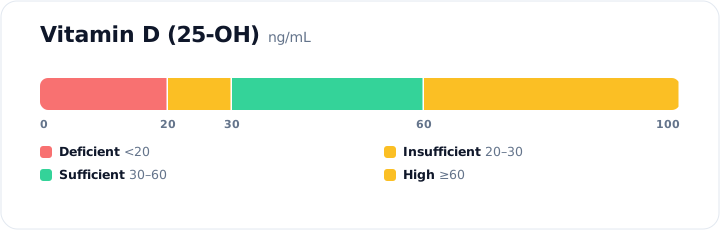
What vitamin D is, and why the lab range is set too low
Vitamin D functions as a hormone, not just a vitamin. Your body makes it from UVB sunlight exposure, and it regulates calcium, immune function, and hundreds of genes throughout the body.
Vitamin D isn't a vitamin in the traditional sense, it's a prohormone synthesised in the skin when ultraviolet B (UVB) radiation hits 7-dehydrocholesterol. The liver converts it to 25-hydroxyvitamin D (25-OH D), the form measured in blood tests. The kidneys then activate it further to 1,25-dihydroxyvitamin D, which acts on receptors in virtually every tissue in the body, bone, muscle, immune cells, brain, and gut.
The standard lab reference range for vitamin D was originally established to prevent rickets and osteomalacia, the severe skeletal consequences of profound deficiency. That's why the threshold sits at 20 ng/mL. But preventing rickets isn't the same as supporting immune function, mood regulation, or muscle performance. The Endocrine Society's 2011 guideline uses a broader cut-off: insufficiency runs from 20 to 29 ng/mL. A result of 22 ng/mL is "normal" on your lab report but insufficient by that guideline. The US Institute of Medicine draws the line lower and treats 20 ng/mL as adequate for bone health.
What your vitamin D number actually means
The lab's reference range catches severe deficiency. The Endocrine Society's 2011 guideline uses broader criteria than the lab's flag, so the numbers below are where the guidelines disagree.
| 25-OH D level (ng/mL) | Classification | Clinical picture | Status |
|---|---|---|---|
| Below 12 | Severe deficiency | Risk of rickets (children) or osteomalacia (adults). Bone pain, muscle weakness, immune impairment. Most labs flag this level. | Act now |
| 12–19 | Deficient (Endocrine Society 2011) | The Endocrine Society (2011) defines deficiency below 20 ng/mL. Impaired calcium absorption, bone loss over time, immune suppression. Often not flagged by labs. | Address |
| 20–29 | Insufficient (Endocrine Society 2011) | The gap zone: "normal" on most reports and adequate by the US Institute of Medicine, but insufficient by the Endocrine Society. Fatigue, low mood, and reduced immune resilience are common in this range. | Suboptimal |
| 30–60 | Sufficient (Endocrine Society 2011) | Above the Endocrine Society's 30 ng/mL line, which is where FixFirst flags. 40–60 ng/mL is the target Rhonda Patrick and Bryan Johnson cite, not a guideline's. The NIH Office of Dietary Supplements links levels above 50 ng/mL to potential adverse effects. | Adequate |
| Above 100 | Potential toxicity zone | Levels above 100 ng/mL can cause hypercalcaemia (excess blood calcium). Does not occur from sunlight, only from very high supplemental doses sustained over time. Recheck supplementation dose. | Review dose |
Frequently asked questions
My vitamin D is 32 ng/mL. Is that okay?
What is a low vitamin D level?
What are the symptoms of low vitamin D?
Does low vitamin D cause fatigue?
How much vitamin D should I take?
Can you get enough vitamin D from food?
Can vitamin D levels be too high?
Symptoms of low vitamin D
Symptoms can appear in the insufficiency zone (20–29 ng/mL), well before levels drop to the lab's deficiency threshold. Many people in this range are asymptomatic, which is why it's so commonly missed.
What causes low vitamin D
Vitamin D is unique in that its primary source is sunlight, not food. Most causes of deficiency relate to insufficient synthesis or absorption.
What to do about low vitamin D
Correcting vitamin D insufficiency is one of the most straightforward interventions in nutritional medicine. The evidence-based approach is consistent and well-established.
References & Guidelines
- NIH Office of Dietary Supplements — Vitamin D Fact Sheet for Health Professionals
- Holick MF et al. — Evaluation, Treatment, and Prevention of Vitamin D Deficiency. Endocrine Society Clinical Practice Guidelines. J Clin Endocrinol Metab. 2011;96(7):1911-30
- Demay MB et al. — Vitamin D for the Prevention of Disease: An Endocrine Society Clinical Practice Guideline. J Clin Endocrinol Metab. 2024;109(8):1907-47
- Holick MF — Vitamin D deficiency. N Engl J Med. 2007;357(3):266-81
- NICE NG187 — Vitamin D: supplement use in specific population groups (2020)
- Pfeifer M et al. — Effects of a short-term vitamin D3 and calcium supplementation on blood pressure. J Clin Endocrinol Metab. 2001;86(4):1633-7
Is vitamin D your top priority?
Upload your blood test and FixFirst ranks vitamin D, and 85 other markers, by what actually needs addressing first for your specific profile.
Analyze My Blood Test →