Low Vitamin B12: What It Means and What to Do
B12 deficiency causes fatigue, nerve tingling, and brain fog, and symptoms often appear before labs flag anything. Here's the borderline zone, why absorption is the real bottleneck, and how to fix it.
What Vitamin B12 measures
Vitamin B12 (cobalamin) is essential for nerve function, DNA synthesis, and red blood cell formation. The serum B12 test measures total B12 circulating in your blood, including inactive protein-bound forms.
Why it matters
Deficiency causes fatigue, brain fog, and tingling or numbness that can become permanent nerve damage if prolonged. Risk is higher for vegans/vegetarians, older adults, and people on metformin or acid-reducing medication.
What B12 does, and why the test misses more than it catches
B12 is involved in DNA synthesis, nerve function, and red blood cell formation. The serum test has a roughly 30% false-negative rate for functional deficiency.
B12 does three critical things: it's required for DNA synthesis in every dividing cell, it maintains the myelin sheath that insulates nerve fibres, and it's a cofactor in red blood cell formation. When it falls short, all three systems degrade, but at different rates and in different ways depending on how long the deficiency has been building.
The serum B12 test measures total B12 in blood, but roughly 80% of circulating B12 is bound to haptocorrin, a transport protein that delivers it to the liver. Only the 20% bound to transcobalamin (holotranscobalamin) is actually available for cellular uptake. Serum B12 doesn't distinguish between these. This is why you can have a "normal" serum level while tissue-level B12 is functionally low.
For most people, the serum test is a reasonable screen. For those with persistent symptoms and a borderline result, holotranscobalamin ("active B12") and methylmalonic acid (which rises when cellular B12 is insufficient for metabolic reactions) are worth requesting.
What your B12 number actually means
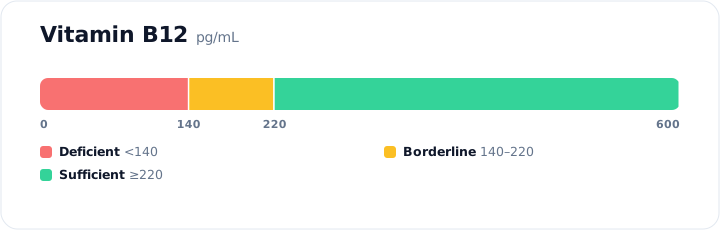
Reference ranges vary by lab, but the clinical picture in each zone is consistent.
| B12 level (pg/mL) | Lab classification | Clinical picture | Status |
|---|---|---|---|
| Below 140 | Flagged low at most labs | Frank deficiency. Risk of megaloblastic anaemia, peripheral neuropathy, and neurological deterioration. Treatment required. | Act now |
| 140–220 | Often within lab "normal" | NICE borderline zone. Neurological symptoms, tingling, fatigue, brain fog, can appear here. Functional deficiency possible. Warrants follow-up and supplementation trial. | Address |
| 220–300 | Normal on most reports | Low-normal. Unlikely to be symptomatic for most people. Worth monitoring annually, particularly in vegans, vegetarians, and metformin users. | Watch |
| 300–700 | Normal | Adequate. Well within functional range for most adults. | Adequate |
| Above 900 | Elevated (may be flagged) | High B12 with no supplementation can indicate liver disease, myeloproliferative disorders, or solid tumours, investigate the cause rather than dismissing it. High B12 from supplements is generally harmless as B12 is water-soluble. | Investigate if unsupplemented |
Frequently asked questions
What is a low vitamin B12 level?
Can I have B12 deficiency symptoms with a normal blood result?
What is the best form of B12 supplement?
Can metformin cause B12 deficiency?
How long does it take for B12 to improve symptoms?
Does B12 deficiency cause hair loss?
Symptoms of low B12
Symptoms span energy, neurological, and haematological systems, and can appear well before the serum level drops enough to trigger a lab flag.
What causes low B12
Low B12 is almost always either an intake problem or an absorption problem, and distinguishing between the two determines what you do about it.
What to do about low B12
The right approach depends entirely on whether the cause is intake or absorption. Getting this wrong means supplementing orally when injections are needed, and staying deficient.
References & Guidelines
Check your B12 against the right thresholds
Upload your blood report and get a ranked read on every marker, including B12 scored against the NICE borderline zone, adjusted for your context.
Analyze My Blood Test →