High Creatinine: When It's a Kidney Signal and When It's Not
Creatinine is the most common kidney marker flagged on routine blood work. It's also the one most easily confused, especially if you take creatine, eat high protein, or recently exercised hard.
What creatinine actually is
Creatinine is a waste product, not a direct measure of kidney health. Understanding what generates it explains why the number can be elevated without any kidney problem.
Creatinine is a waste product produced when muscles break down creatine and creatine phosphate. Creatine phosphate is the molecule muscles use to regenerate ATP during short, high-intensity effort, sprinting, lifting, any explosive movement. As creatine is used and recycled, a small, relatively fixed fraction breaks down into creatinine. That creatinine is filtered out of the blood by the kidneys and excreted in urine.
Because creatinine production is tied to muscle mass and creatine turnover, it's used as a proxy for kidney filtration rate. If creatinine production is roughly stable, then how much accumulates in blood reflects how efficiently the kidneys are clearing it. A rising creatinine (tracked over months or across multiple draws) is a meaningful kidney signal. But the assumption of stable production is exactly what creatine supplementation and high muscle mass violate.
eGFR is calculated directly from serum creatinine (using formulas that also account for age and sex). A higher creatinine produces a lower eGFR. This is why a flagged creatinine result often comes with a flagged eGFR, but if the creatinine elevation is non-kidney in origin, the eGFR estimate is similarly off. The comprehensive metabolic panel (CMP) includes both creatinine and BUN (blood urea nitrogen), which together give a clearer picture than creatinine alone.
Reference ranges and what they mean
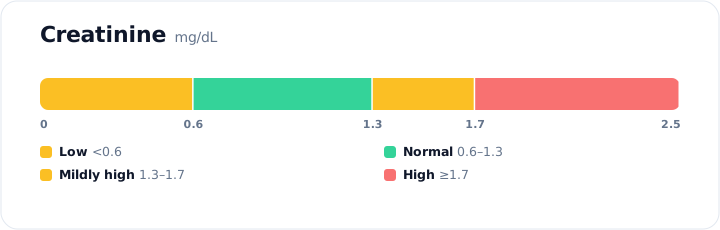
The standard ranges are population averages. Whether a result above the range matters depends heavily on context.
| Creatinine level | Population / sex | Clinical picture | Status |
|---|---|---|---|
| 0.6–1.1 mg/dL | Women, standard range | Normal range for average female muscle mass. Athletes and women with high muscle mass may run slightly higher without kidney involvement. | Normal |
| 0.7–1.3 mg/dL | Men, standard range | Normal range for average male muscle mass. Men taking creatine or with high muscle mass often exceed 1.3 mg/dL without any kidney dysfunction. | Normal |
| 1.3–1.7 mg/dL (men) 1.1–1.4 mg/dL (women) | Mildly elevated | Warrants context. Creatine supplementation, high muscle mass, dehydration, or recent intense exercise are common non-kidney causes. Assess alongside eGFR, BUN, and trend over time. | Needs context |
| Above 1.7 mg/dL (men) Above 1.4 mg/dL (women) | Clearly elevated | More likely to reflect genuine kidney dysfunction, especially if persistent and combined with low eGFR, elevated BUN, or proteinuria. Clinical follow-up warranted unless a clear non-kidney cause is established. | Follow up |
| Below 0.6 mg/dL (women) Below 0.7 mg/dL (men) | Low creatinine | Often reflects low muscle mass. Can mask kidney disease, eGFR will appear normal despite reduced filtration because there is less creatinine being produced. Relevant in elderly or frail patients. | Review |
The creatine supplement problem
This is the most frequently misread result in routine blood work for gym-goers. If you take creatine monohydrate, your creatinine will be elevated. That doesn't mean your kidneys are struggling.
Creatine (the supplement) and creatinine (the lab marker) are directly connected. When you take creatine monohydrate, your muscles absorb it and use it to replenish creatine phosphate stores. As that creatine cycles through the body, a fixed proportion breaks down into creatinine. More creatine in the system means more creatinine is produced and needs to be cleared by the kidneys.
A typical dose of 3–5g of creatine monohydrate per day raises serum creatinine by 10–30% above an individual's baseline. In a person with a pre-supplementation creatinine of 1.1 mg/dL, this could push the result to 1.2–1.4 mg/dL, above the standard upper limit and flagged on any standard lab report. The result looks like a kidney problem. It isn't.
What's happening is that the kidneys are clearing a higher load of creatinine, not filtering it less efficiently. Creatine loading increases creatinine production; kidney filtration per unit of creatinine is unchanged. Poortmans and Francaux, writing in Medicine and Science in Sports and Exercise in 1999, examined long-term creatine supplementation in healthy individuals and found no impairment of kidney function despite elevated creatinine readings. That finding has been replicated across subsequent studies in healthy adults. See how other common supplements affect specific markers for the same pattern with iron, B12, and fish oil.
The clinical implication is straightforward: a creatinine of 1.4 mg/dL in a 25-year-old male taking 5g/day of creatine monohydrate with an eGFR above 90 is a very different finding from a 1.4 mg/dL in a 65-year-old sedentary person with an eGFR of 52. The number alone doesn't tell you which one you're looking at.
When you select creatine in FixFirst, the analysis adjusts
When you upload your blood test to FixFirst and work through the supplement questionnaire, selecting creatine monohydrate triggers two specific changes in how the creatinine result is handled:
- The urgency weighting on elevated creatinine is reduced — a mildly elevated result is not surfaced as a high-priority finding when creatine use is declared
- The explanation on the creatinine result specifically notes creatine supplementation as a likely contributor to the elevation
This is built into the analysis algorithm, not appended as a generic disclaimer. The goal is to avoid surfacing creatine-driven creatinine as a kidney concern when the most likely explanation is supplementation. If creatinine is severely elevated or accompanied by a low eGFR, BUN, or proteinuria, those findings are still flagged, the supplement adjustment applies to mild, isolated creatinine elevation in the context of declared creatine use.
Upload my resultsOther non-kidney causes of elevated creatinine
Creatine supplementation is the most common culprit, but four other factors regularly push creatinine above range without touching kidney function.
When elevated creatinine is a kidney signal
No single number is the alarm. The concern comes from specific combinations of findings, not from a creatinine result in isolation.
- Creatinine mildly elevated (just above upper limit)
- eGFR above 60, often above 90
- BUN normal or low-normal
- No protein in urine
- Taking creatine, high muscle mass, recently exercised hard, or possibly dehydrated at draw
- First elevated reading with no prior trend
- Creatinine persistently elevated across multiple draws over weeks or months
- eGFR below 60 (and particularly below 45)
- BUN elevated alongside creatinine
- Protein detected in urine (proteinuria)
- No clear non-kidney explanation (no creatine, normal muscle mass, well-hydrated)
- Rising creatinine trend over time
The KDIGO (Kidney Disease: Improving Global Outcomes) definition of chronic kidney disease requires eGFR below 60 mL/min/1.73m² persisting for more than 3 months, or markers of kidney damage such as proteinuria, even if eGFR is above 60. A single elevated creatinine draw without these accompanying features is not, by itself, a CKD diagnosis.
BUN:creatinine ratio adds useful context. A ratio above 20:1 suggests prerenal causes (dehydration, reduced blood flow to the kidneys) where creatinine rises because of volume contraction rather than kidney damage. A ratio in the normal range (10–20:1) with an elevated creatinine points more toward a kidney or high-production cause. Neither reading replaces clinical judgment, but it helps distinguish volume depletion from intrinsic kidney dysfunction.
Low creatinine: the other direction
Low creatinine is less commonly discussed but clinically relevant, particularly in older adults.
Creatinine below 0.6 mg/dL in women or below 0.7 mg/dL in men typically reflects low muscle mass. This occurs with age-related muscle loss (sarcopenia), prolonged illness, malnutrition, or simply a small body frame with low lean mass.
The clinical risk is that low muscle mass can mask kidney disease. Since eGFR is calculated from creatinine, a person with very low muscle mass produces less creatinine than average. Their eGFR will appear normal or even elevated because the formula interprets the low creatinine as good kidney clearance, when it actually reflects low production. A frail 80-year-old with a creatinine of 0.7 mg/dL and an eGFR of 85 may have meaningfully worse kidney function than that eGFR suggests.
In these cases, cystatin C, an alternative kidney function marker unaffected by muscle mass, provides a more accurate eGFR estimate. If low creatinine is flagged in an elderly or clinically frail individual, it is worth asking the ordering clinician whether cystatin C-based eGFR is appropriate.
Frequently asked questions
What does high creatinine mean?
Does creatine (the supplement) raise creatinine levels?
How much does creatine monohydrate raise creatinine?
What is the difference between creatine and creatinine?
What creatinine level is dangerous?
Does high creatinine always mean kidney disease?
References & Guidelines
Get your creatinine result read in context
Upload your blood test to FixFirst. Select creatine in the supplement questionnaire if you take it, and the analysis will account for it when interpreting your creatinine result. 45 seconds, free.
Analyze My Blood Test →