Liver function blood test: what each marker actually means
A standard CMP includes six liver markers but flags very few of them. Here's what ALT, AST, ALP, GGT, bilirubin, and albumin tell you, and which one is the most sensitive early-warning signal.
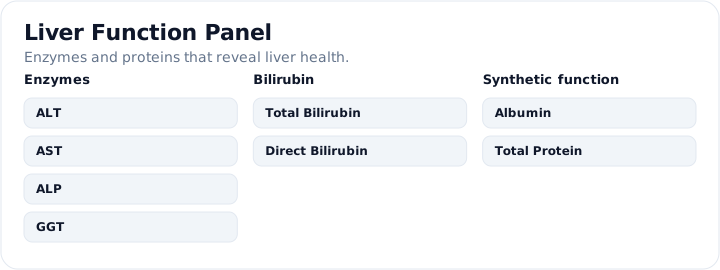
Six markers, three functions, and one the lab doesn’t include
The liver panel assesses cell damage, bile flow, and synthetic capacity. Each cluster tells a different story.
The liver is metabolically central, it processes everything you eat, drink, and absorb. A liver function test (LFT or CMP hepatic panel) measures markers that reflect three distinct functions: cell damage (ALT, AST), bile flow obstruction (ALP, GGT, bilirubin), and synthetic capacity (albumin, total protein). Albumin is not the only protein that falls when synthetic capacity drops: the liver also makes less transferrin, which is why chronic liver disease often shows up as a low unsaturated iron-binding capacity on an iron panel.
ALT (alanine aminotransferase) is the most liver-specific marker. It's released when liver cells are damaged or inflamed. AST is similar but also found in muscle, heart, and kidneys, so elevated AST alone is less diagnostic than elevated ALT.
GGT (gamma-glutamyl transferase) is not on a standard CMP but is the most sensitive early indicator of liver stress, particularly for alcohol-related damage and fatty liver. ALP (alkaline phosphatase) rises in bile duct obstruction and certain bone conditions. The distinction between the two matters: a normal GGT with elevated ALP points to bone, not liver.
Albumin and total protein reflect the liver's synthetic function, how well it's manufacturing proteins. They're usually the last to drop and signal more chronic or severe impairment when they do. An elevated enzyme with normal albumin is a very different picture from one with low albumin.
What your liver marker results mean
Reference ranges, patterns to watch for, and when to escalate.
| Marker | Normal range | Mildly elevated | When to investigate |
|---|---|---|---|
| ALT | <35 U/L (women), <45 U/L (men) | Often NAFLD, alcohol, or medication effect (35–100 U/L) | >3× upper limit: investigate cause; >10×: urgent evaluation |
| AST | <35 U/L | Elevated AST with elevated ALT: liver origin likely. Elevated AST alone: consider muscle or cardiac source | AST:ALT ratio >2:1 suggests alcohol; >3:1 is strongly suggestive |
| ALP | 44–147 U/L | Mildly elevated in isolation: often bone origin (growth, healing, Paget's disease) | Elevated ALP + elevated GGT: bile duct origin likely; investigate for obstruction |
| GGT | <50 U/L | Sensitive to even moderate alcohol intake, medications, and fatty liver. Normal GGT with elevated ALP suggests bone, not liver | Persistently elevated GGT with no clear cause: abdominal ultrasound warranted |
| Bilirubin (total) | <1.2 mg/dL | Mildly elevated in isolation: check for Gilbert's syndrome (benign inherited variant, affects ~5% of the population) | Jaundice appears above ~2.5 mg/dL; elevated bilirubin with elevated ALP suggests bile duct obstruction |
| Albumin | 3.5–5.0 g/dL | Low albumin reflects impaired synthetic function, seen in cirrhosis, chronic malnutrition, and advanced chronic disease | Below 3.0 g/dL: investigate chronic liver disease or significant protein malnutrition |
What causes elevated liver enzymes
Most mildly elevated liver enzymes have a reversible cause. These are the most common ones, ordered by frequency.
Why ALT is high after drinking, and how long it stays elevated
A single elevated ALT after a drinking episode is common and usually temporary. Here's the typical timeline and when it signals something more.
What to do when liver markers are elevated
The sequence matters. Start with the reversible causes before escalating to imaging or specialist referral.
FAQ — liver function blood tests
What is a liver function test?
What does elevated ALT mean?
Is it serious if my liver enzymes are elevated?
What is GGT and why isn't it on my standard blood test?
What is the difference between ALT and AST?
What is an ideal AST to ALT ratio?
Is an AST/ALT ratio of 0.68 normal?
What AST/ALT ratio indicates cirrhosis?
How long does it take for ALT to go down after drinking?
Should I stop drinking if my liver enzymes are high?
What are the first signs of liver damage from alcohol?
References & Guidelines
- AASLD Practice Guidelines (liver)
- NICE Clinical Knowledge Summaries
- O'Shea RS et al. Alcoholic liver disease (AASLD practice guideline). Hepatology, 2010
- Williams AL, Hoofnagle JH. Ratio of serum aspartate to alanine aminotransferase in chronic hepatitis: relationship to cirrhosis. Gastroenterology, 1988
Elevated liver enzymes on your results?
Upload your blood test and FixFirst identifies which liver markers are flagged, ranks them by priority, and tells you what to do first.
Analyze My Blood Test →