HbA1c blood test: what your result actually means
HbA1c measures your average blood glucose over the past 3 months. Most labs flag only above 6.5%, but the real action zone starts lower. Here's what your number means, including the prediabetes band and the optimal range.
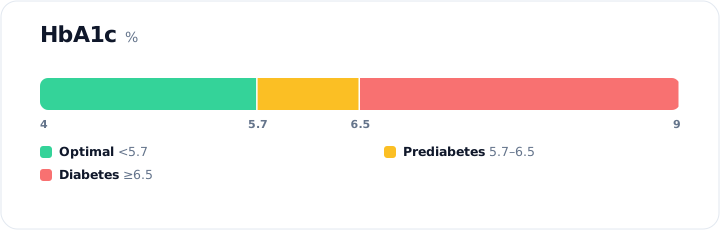
What HbA1c measures, and why the reference range has a gap
HbA1c averages 3 months of glucose exposure in one number. The problem is most labs only flag it at the diabetes threshold, missing the window where intervention works best.
HbA1c (glycated hemoglobin, also written A1c) measures the percentage of hemoglobin molecules that have glucose attached. Because red blood cells live roughly 90 days, HbA1c averages your blood sugar over that period. A single fasting glucose snapshot can be manipulated by one good day before the test; HbA1c can't.
The diagnostic cut-offs come from the American Diabetes Association: below 5.7% is normal, 5.7–6.4% is prediabetes, 6.5% and above is diabetes. Most UK labs use slightly different thresholds (42 mmol/mol = 6.0% for prediabetes; 48 mmol/mol = 6.5% for diabetes).
The reference range problem: most labs only flag HbA1c at 6.5% or above. But the prediabetes band (5.7–6.4%) is where lifestyle intervention is most effective, the Diabetes Prevention Program RCT (New England Journal of Medicine, 2002) showed that intensive lifestyle intervention reduced progression from prediabetes to diabetes by 58%. At 6.4%, that intervention window is still open. At 7.5%, you're already in treatment territory.
A result of 5.4% looks fine on paper. But if your last three results were 5.1%, 5.2%, and 5.4%, that directional trend over 3 years matters, especially alongside elevated fasting glucose or high triglycerides.
What your HbA1c result means
US and UK thresholds differ. Here's how to read your number in both systems, and what each classification means for action.
| HbA1c (%) | HbA1c (mmol/mol) | Classification | What it means |
|---|---|---|---|
| Below 5.0% | <31 | Optimal | Low-normal. No action needed. |
| 5.0–5.6% | 31–38 | Normal | Within healthy range. Monitor annually. |
| 5.7–6.4% | 39–46 | Prediabetes (ADA) | Lifestyle intervention is highly effective at this stage. Reduce refined carbs, increase physical activity, target 5–7% body weight reduction if overweight. |
| 6.0–6.4% | 42–46 | Prediabetes (NICE/UK) | NICE defines prediabetes starting at 42 mmol/mol. High risk of progression to type 2 diabetes. Structured lifestyle programme recommended. |
| 6.5% and above | ≥48 | Diabetes (diagnostic) | ADA and NICE diagnostic threshold. Two readings above this threshold, or one above 6.5% with symptoms, confirms type 2 diabetes diagnosis. |
| Above 8.0% | >64 | Poorly controlled diabetes | Indicates need for medication review or intensification. Risk of complications rises significantly at this level. |
Values in mmol/mol (IFCC) are used in the UK and internationally; % (NGSP/DCCT) are used in the US. The ranges above show both.
What drives HbA1c up
These are the modifiable causes, the levers you can pull before medication becomes the conversation.
What to do based on your result
The earlier you act, the more effective the intervention. Here's the evidence-based protocol for each stage.
FAQ — HbA1c explained
What is a normal HbA1c level?
What does HbA1c 5.9% mean?
Can HbA1c be inaccurate?
How fast can HbA1c change?
What is the difference between HbA1c and fasting glucose?
References & Guidelines
Is HbA1c your priority marker?
Upload your blood test and FixFirst ranks your HbA1c alongside fasting glucose, triglycerides, and other metabolic markers, and tells you which to address first.
Analyze My Blood Test →