High LDL Cholesterol: What It Actually Means for You

LDL above the reference range is not a uniform cardiovascular risk. Your HDL ratio, triglycerides, inflammation markers, and family history change the picture substantially. Here's how to read your number in context.

Check My Cholesterol Profile See a sample analysis
Based on ACC/AHA 2019 & NICE CG181 guidelines 86 markers analysed Free, no account needed

What LDL is — and why the number alone is incomplete

LDL (low-density lipoprotein) carries cholesterol from the liver to cells throughout the body. At elevated levels, excess LDL can deposit in artery walls — but how much risk that creates depends on far more than the number itself.

1 in 250
People have familial hypercholesterolaemia (FH)
FH is a genetic condition causing very high LDL (often 190+ mg/dL) regardless of diet. It's underdiagnosed and raises lifetime cardiovascular risk substantially — but responds well to statins when identified.
Greater risk with high LDL and high hsCRP combined
The JUPITER trial found that people with LDL below 130 mg/dL but elevated hsCRP (>2 mg/L) had significantly elevated cardiovascular event rates — suggesting inflammation amplifies the risk of a given LDL level.
LDL:HDL
The ratio predicts risk better than LDL alone
An LDL of 140 mg/dL with an HDL of 70 mg/dL represents a very different risk profile from LDL 140 with HDL 35 mg/dL. The ACC/AHA emphasises total cardiovascular risk calculation over any single marker.

Think of LDL as a delivery truck. Its job is to carry cholesterol — a molecule your body needs for cell membranes, hormones, and bile acid production — from the liver out to tissues. Problems arise when there are too many trucks, when they get stuck in artery walls, and especially when those walls are already inflamed. The same level of LDL in an artery wall that's calm and intact behaves differently from one that's inflamed from smoking, hypertension, or metabolic disease.

This is why the ACC/AHA 2019 Prevention Guidelines moved away from treating LDL numbers in isolation. The current framework calculates 10-year cardiovascular event risk using age, sex, race, blood pressure, diabetes, and smoking status alongside LDL. A 35-year-old non-smoker with LDL of 145 mg/dL and no other risk factors has a very low absolute risk. A 60-year-old with hypertension, diabetes, and family history of early heart disease with LDL of 130 mg/dL may have a much higher one — even though the LDL number is lower.

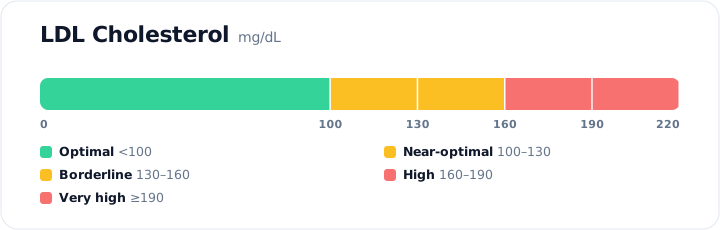
The LDL classification system

Based on the NCEP ATP III classification used by ACC/AHA guidelines — but remember that clinical significance depends on your full risk profile, not the category alone.

LDL level (mg/dL) Classification (NCEP ATP III) Clinical context Status
Below 70 Very low — target for high-risk patients ACC/AHA recommends LDL <70 mg/dL for those with established cardiovascular disease or very high 10-year risk. For low-risk adults, there's no evidence benefit to targeting this level. Low risk target
70–99 Optimal (ACC/AHA primary prevention) The ACC/AHA target for most adults without cardiovascular disease. Associated with low LDL-driven cardiovascular risk at typical levels of other risk factors. Optimal
100–129 Near optimal / above optimal Slightly above target. For most people without other risk factors this is low absolute risk. Lifestyle changes are worth making; medication is rarely indicated at this level alone. Monitor
130–159 Borderline high Where lifestyle changes make meaningful impact. Risk assessment matters here — the same LDL can warrant different responses depending on your full risk profile. Diet and exercise are the first-line intervention. Address
160–189 High Statin therapy may be appropriate depending on overall cardiovascular risk. Consider testing for familial hypercholesterolaemia if no clear dietary explanation, especially with a family history of early cardiovascular disease. Assess risk
190 and above Very high ACC/AHA recommends statin therapy at this level regardless of calculated 10-year risk. LDL this high often indicates familial hypercholesterolaemia — genetic testing and specialist referral are worth considering. Act now
Why context matters as much as the number
FixFirst accounts for age, sex, medications, family history of cardiovascular disease, and existing conditions when ranking LDL. A 55-year-old sedentary male with LDL of 148 mg/dL and a family history of heart disease gets a different priority ranking from a 30-year-old plant-based athlete with identical LDL — and appropriately so.
See how context-aware analysis differs from general AI

Context factors that change what your LDL means

These are the co-factors the ACC/AHA 2019 Prevention Guideline uses as "risk enhancers" — factors that increase or decrease the cardiovascular risk associated with a given LDL level.

HDL cholesterol
HDL ("good" cholesterol) removes LDL from artery walls. An LDL:HDL ratio below 3.5:1 is significantly lower risk than the same LDL with a low HDL. ACC/AHA uses total:HDL ratio as a risk modifier.
Triglycerides
High triglycerides (above 150 mg/dL) alongside high LDL indicates a more atherogenic lipid pattern. Triglycerides above 200 mg/dL make LDL calculation via Friedewald equation less reliable — direct LDL measurement may be needed.
hsCRP (high-sensitivity CRP)
A marker of systemic inflammation. Elevated hsCRP (above 2 mg/L) significantly amplifies the risk associated with any given LDL level. The JUPITER trial demonstrated statin benefit in people with below-average LDL but elevated hsCRP.
Family history
A first-degree relative with cardiovascular disease before age 55 (males) or 65 (females) is an independent risk enhancer. It raises the possibility of familial hypercholesterolaemia and increases lifetime cardiovascular risk independent of other factors.
Age and sex
Cardiovascular risk is a cumulative exposure calculation. A 35-year-old with LDL 155 mg/dL has a low absolute 10-year risk; a 60-year-old with LDL 145 mg/dL may have a much higher one. Risk scoring tools (Pooled Cohort Equations) use both directly.
Diabetes and blood sugar
Type 2 diabetes triples cardiovascular risk at any given LDL level. HbA1c between 5.7% and 6.4% (prediabetes) also elevates risk above baseline. Blood sugar control and LDL should be interpreted together.

What causes high LDL

LDL elevation can be dietary, genetic, secondary to another condition, or a combination of all three. Identifying the dominant cause shapes what the intervention looks like.

🥩
High saturated fat intake
Saturated fat — found in red meat, full-fat dairy, coconut oil, and palm oil — raises LDL by suppressing LDL receptor activity in the liver, reducing the rate at which LDL is cleared from circulation. Replacing saturated fat with polyunsaturated fat (olive oil, nuts, oily fish) is the most evidence-backed dietary change for LDL reduction. Trans fats (partially hydrogenated oils) both raise LDL and lower HDL — they're now largely removed from processed foods in most countries but still present in some products.
🧬
Familial hypercholesterolaemia (FH)
Caused by a mutation in the LDLR, APOB, or PCSK9 gene, FH impairs the liver's ability to clear LDL from the blood regardless of diet. LDL levels in FH are typically 190–400 mg/dL. It affects approximately 1 in 250 people globally but remains underdiagnosed. FH should be suspected in anyone with LDL above 190 mg/dL, a family history of premature cardiovascular disease, or tendon xanthomas. Statins are highly effective and are the standard of care.
🦋
Hypothyroidism
The thyroid hormone T3 directly regulates LDL receptor expression in the liver. When TSH is elevated (indicating low thyroid function), LDL clearance slows and LDL rises. This is a correctable cause — treating the thyroid condition typically normalises LDL. If your LDL is elevated and you have fatigue, cold intolerance, or weight gain, checking TSH is worthwhile before assuming the LDL is dietary.
🔄
Low-carbohydrate and ketogenic diets
A subset of people — labelled "lean mass hyper-responders" by researcher Dave Feldman — experience dramatic LDL increases (often to 200–300 mg/dL) on very-low-carbohydrate diets, typically alongside elevated HDL and low triglycerides. The cardiovascular risk implications of this pattern are not yet well-established by long-term prospective data, and its significance is actively debated. If your LDL has risen sharply after starting a low-carb diet and your triglycerides are low and HDL is high, this context is worth discussing with a provider rather than acting on the LDL number alone.
💊
Medications
Several commonly prescribed drugs raise LDL as a side effect: thiazide diuretics (used for hypertension), some beta-blockers, corticosteroids (prednisone, dexamethasone), certain progestins in oral contraceptives, and immunosuppressants. If LDL has risen after starting a new medication, discuss the timing with your prescriber — a formulation change may resolve it.

How to lower LDL cholesterol

Lifestyle changes are the first-line intervention for most people with borderline-high to high LDL and no established cardiovascular disease. The evidence is specific and actionable.

1
Replace saturated fat with polyunsaturated fat
This is the single most evidence-supported dietary change for LDL reduction. Replacing 5% of energy from saturated fat with polyunsaturated fat lowers LDL by approximately 10 mg/dL. Practical changes: switch from butter to olive oil; replace red meat with fish and legumes; use nuts (almonds, walnuts) in place of cheese for snacking. Avoid the error of replacing fat with refined carbohydrates — that raises triglycerides and lowers HDL, worsening the overall lipid profile.
2
Increase soluble fibre intake
Soluble fibre binds bile acids in the gut, reducing their reabsorption and forcing the liver to convert more cholesterol into bile. Meta-analyses show that 10–25g of soluble fibre per day reduces LDL by 3–12%. Best sources: oats and oat bran (beta-glucan), psyllium husk (most concentrated source — 5g psyllium twice daily is a studied protocol), legumes (lentils, chickpeas, kidney beans), apples, and flaxseed. Psyllium powder stirred into water or yoghurt is the most practical way to reach effective doses.
3
Add plant sterols to your diet
Plant sterols and stanols compete with cholesterol for absorption in the intestine. At 1.5–2.4g/day, they lower LDL by 5–15% without affecting HDL or triglycerides. They're found in fortified margarines and yoghurts, or available as supplements. They work additively with dietary fibre — combining both approaches can achieve LDL reductions of 15–20% from lifestyle alone in motivated individuals.
4
Exercise — particularly aerobic exercise
Aerobic exercise has a modest direct effect on LDL (typically 3–6 mg/dL reduction) but substantially raises HDL and lowers triglycerides — improving the overall lipid profile beyond what LDL alone shows. More importantly, exercise reduces cardiovascular risk through blood pressure, insulin sensitivity, and inflammation pathways that are independent of LDL. 150 minutes of moderate-intensity aerobic activity per week is the ACC/AHA recommendation.
5
If lifestyle changes aren't enough — reassess with your provider
After 12 weeks of consistent lifestyle modification, retest your full lipid panel. If LDL remains above 160 mg/dL or you have additional risk factors, a frank conversation about statins is warranted. Statins reduce LDL by 30–50%, are well-studied with over 50 years of evidence, and reduce cardiovascular events by 25–35% in at-risk populations. The decision involves your full risk profile — not just LDL — and is appropriately a shared one with your doctor.
When to expect change from lifestyle modification
Dietary changes and exercise affect LDL within 4–8 weeks. A focused dietary protocol (saturated fat reduction, soluble fibre increase, plant sterols) tested at 12 weeks typically shows 10–20% LDL reduction in adherent individuals. Retest your full lipid panel — including HDL and triglycerides — at 12 weeks to assess the full picture of change, not just LDL. If you're also adjusting medications or have hypothyroidism being treated, allow those changes to fully take effect before re-evaluating.

FAQ — everything about high LDL cholesterol

What is a high LDL cholesterol level?
The NCEP ATP III classification defines borderline high LDL as 130–159 mg/dL, high as 160–189 mg/dL, and very high as 190 mg/dL and above. The ACC/AHA targets LDL below 100 mg/dL for primary prevention in adults and below 70 mg/dL for those with established cardiovascular disease. However, what's clinically significant depends on your full risk profile — LDL 145 mg/dL in a healthy 30-year-old is not the same clinical situation as LDL 145 mg/dL in a 60-year-old with hypertension and a family history of heart disease.
Is LDL alone enough to assess cardiovascular risk?
No. The ACC/AHA 2019 Prevention Guidelines explicitly recommend calculating 10-year cardiovascular risk using the Pooled Cohort Equations — which incorporate age, sex, race, blood pressure, diabetes, and smoking alongside LDL. Additional risk enhancers include HDL, triglycerides, hsCRP, Lp(a), and family history. A statin decision based on LDL alone is not consistent with current guidelines for most adults in the 130–190 mg/dL range.
What causes high LDL cholesterol?
The main causes are: high saturated fat intake; familial hypercholesterolaemia (genetic, affects 1 in 250 people); hypothyroidism (low thyroid function impairs LDL clearance); kidney disease and nephrotic syndrome; medications including thiazide diuretics, corticosteroids, and some beta-blockers; and low-carbohydrate diets in certain individuals. Identifying the dominant cause determines the right approach — treating hypothyroidism resolves LDL caused by it; dietary changes won't fully correct FH.
How much can diet lower LDL?
A focused dietary protocol — replacing saturated fat with polyunsaturated fat, adding 10–25g/day of soluble fibre, and including 1.5–2.4g/day of plant sterols — can reduce LDL by 15–25% in adherent individuals over 12 weeks. This is meaningful but not equivalent to a statin (which reduces LDL by 30–50%). For people with LDL in the borderline-high range (130–159 mg/dL) and no other major risk factors, lifestyle changes are the appropriate first step and should be given 12 weeks to show effect before re-evaluating.
Should I be worried about high LDL on a low-carb diet?
Possibly, but the picture is more complex than a high LDL number alone. Some people — often lean individuals — experience large LDL increases on ketogenic or low-carb diets alongside elevated HDL and very low triglycerides. This pattern (dubbed "lean mass hyper-responder") doesn't fit the typical cardiovascular risk model built on high LDL with low HDL and high triglycerides. The long-term risk of this phenotype is not well-characterised by current data. If your LDL has risen sharply after starting a low-carb diet, it's worth measuring directly (not calculated), checking your Lp(a), and discussing the full context with a doctor rather than acting on LDL alone.
Are statins always necessary for high LDL?
No. The ACC/AHA 2019 guideline recommends statins for adults with LDL above 190 mg/dL, those with established cardiovascular disease (LDL targets below 70 mg/dL), and adults with diabetes and LDL 70–189 mg/dL. For everyone else in the 130–189 mg/dL range, the decision involves calculating 10-year cardiovascular event risk and a shared discussion between patient and provider. Statins are highly effective and well-tolerated, but lifestyle changes producing 15–20% LDL reduction deserve a genuine 12-week trial before medication is considered for borderline elevations in otherwise low-risk individuals.
Medical disclaimer: FixFirst is an educational tool, not a medical device. Thresholds and recommendations in this guide are based on the ACC/AHA 2019 Guideline on the Primary Prevention of Cardiovascular Disease, NCEP ATP III, and NICE CG181 (Cardiovascular disease: risk assessment and reduction, including lipid modification). Always consult a licensed healthcare provider before making changes to cholesterol-lowering medication or interpreting lipid results in the context of specific medical conditions.

Is LDL your top priority right now?

Upload your blood test and FixFirst ranks LDL — in the context of your full lipid panel, age, sex, and lifestyle — against 85 other markers. Your priorities, not just your numbers.

Upload My Blood Report →