High TSH: What It Means, Symptoms, and When to Act
TSH isn't a thyroid hormone, it's the signal your brain sends when thyroid output is falling short. A high result means the brain is compensating. Here's what that actually means for you.
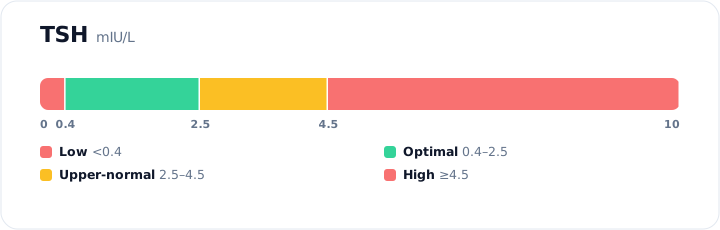
What TSH actually is, and why a high result means the thyroid is struggling
TSH is not a thyroid hormone. It's the pituitary's output, a signal that goes up when thyroid production is insufficient and down when the thyroid is overproducing.
Here's the pituitary-thyroid feedback loop in plain terms: your pituitary gland constantly monitors circulating thyroid hormone (T4 and T3). When levels are sufficient, it keeps TSH low. When it detects the thyroid isn't producing enough, it turns up TSH, sending a stronger signal to the thyroid to produce more hormone. A high TSH is the pituitary's way of trying to compensate for an underperforming thyroid.
This means TSH is an indirect measure, it tells you what the brain thinks is happening, not what the thyroid is actually producing. This is why TSH alone is a screening tool, not a complete picture. You can have a TSH of 3.9 mIU/L (technically normal) while Free T4 is at the bottom of its range and Free T3 conversion is impaired, and feel every classic hypothyroid symptom without a single test coming back flagged.
The upper half of the normal TSH range (roughly 2.5–4.5 mIU/L) is where the most clinical disagreement sits. Labs classify it as normal. Many thyroid specialists don't treat it. But the patient experience documented in published research and in large community databases like those behind Hashimoto's forums consistently shows that a meaningful proportion of people with TSH in this zone have real fatigue, cold intolerance, and cognitive slowing that improves when TSH is brought lower.
What your TSH level actually means
The clinical zones, what each means for your thyroid, and what action is typically warranted.
| TSH level (mIU/L) | Classification | Clinical picture | Status |
|---|---|---|---|
| Below 0.4 | Low, suppressed | Suggests hyperthyroidism (overactive thyroid) or over-treatment with levothyroxine. Requires Free T4 and Free T3 to assess. Low TSH from hyperthyroidism has different implications than low TSH from over-treatment. | Investigate |
| 0.4–2.5 | Normal, optimal zone | Most people feel well in this range. Many specialists target below 2.5 for treated hypothyroid patients. No action needed if asymptomatic. | Optimal |
| 2.5–4.5 | Normal, upper zone | Technically within normal range but the symptomatic borderline zone. Fatigue, cold intolerance, brain fog, and weight gain are reported here. If symptoms are present, full thyroid panel (Free T4, Free T3, anti-TPO) is warranted to assess the complete picture. | Monitor if symptomatic |
| 4.5–10 | Subclinical hypothyroidism | TSH above normal with Free T4 still in range. Pituitary is compensating to maintain T4 output. Risk of progression to overt hypothyroidism, particularly with positive anti-TPO. Treatment decision depends on symptoms, antibody status, and cardiovascular risk. | Discuss treatment |
| Above 10 | Overt hypothyroidism | Most guidelines recommend treatment at this level regardless of symptoms. Free T4 is typically low. Symptoms are usually present: fatigue, cold intolerance, weight gain, dry skin, constipation, low mood. | Treat |
Is a TSH of 2.8 high?
No. 2.8 mIU/L is inside the reference range (0.4–4.0 on the American Thyroid Association range FixFirst uses; some labs go to 4.5), and FixFirst does not flag it. It sits in the upper half of the range, which matters only next to something else: symptoms of an underactive thyroid, positive TPO antibodies, a TSH that has risen across several tests, or pregnancy, where trimester-specific ranges apply (ATA 2017). If none of those apply, a single 2.8 needs no action. Borderline results puts it next to other common borderline numbers.
High TSH with normal T4 and T3: the subclinical zone
TSH above 4.5 mIU/L with free T4 and free T3 both in range is subclinical hypothyroidism. It affects 4–8.5% of adults without known thyroid disease and is the most common thyroid lab finding.
The normal T4 here is normal because TSH is elevated, the pituitary is compensating with a stronger signal to maintain output. Remove that elevated TSH signal and T4 would fall. A normal T4 alongside high TSH means the system is under strain, not that the thyroid is fine.
Trajectory depends mainly on antibody status. With positive TPO antibodies, progression to overt hypothyroidism runs at roughly 4–5% per year. With negative antibodies, many people stay stable for years or normalise spontaneously, particularly after an illness or acute stressor that transiently raised TSH.
| Pattern | What it means | Next step |
|---|---|---|
| TSH 4.5–7, T4 normal, T3 normal | Mild subclinical hypothyroidism. Lowest-acuity pattern, but antibody status determines progression risk. | Add TPO antibodies. Retest TSH in 3–6 months. |
| TSH 7–10, T4 normal, T3 normal | Pituitary compensating significantly. Treatment decision depends on symptoms, antibodies, age, and cardiovascular risk. | Full panel. Discuss treatment if symptomatic or anti-TPO positive. |
| TSH above 10, T4 normal | ATA and AACE recommend treatment regardless of symptoms at this level. The normal T4 may not hold without intervention. | Discuss levothyroxine with your GP. |
Symptoms of high TSH / underactive thyroid
Hypothyroid symptoms are non-specific, they overlap with iron deficiency, B12 deficiency, and depression. But some patterns are more thyroid-specific than others.
Causes of high TSH in females
Three female-specific causes account for most of the sex gap. Each has a distinct trigger, timeline, and prognosis.
What a full thyroid panel looks like, and what to ask for
Standard panels often include only TSH. A complete picture requires more, and the additional tests change both diagnosis and treatment decisions.
High TSH with no thyroid: post-thyroidectomy and post-ablation
After total thyroidectomy or radioiodine ablation, there is no thyroid tissue left. A high TSH means the levothyroxine dose is too low, not that new thyroid disease has developed.
Without a thyroid, TSH is entirely controlled by the levothyroxine dose. The pituitary is sensing insufficient hormone and sending a stronger signal to a gland that no longer exists. The action is a dose increase, not further thyroid investigation. Recheck TSH 6–8 weeks after any adjustment.
The TSH target depends on why the thyroid was removed. Benign disease calls for standard replacement. Thyroid cancer changes the target because residual cancer cells can be stimulated by TSH, guidelines recommend keeping TSH suppressed to varying degrees depending on cancer risk.
| Reason for thyroidectomy | TSH target | Rationale |
|---|---|---|
| Benign disease (goitre, nodules, Graves') | 0.5–2.0 mIU/L | Standard replacement. No reason to suppress TSH once cancer is excluded. |
| Low-risk differentiated thyroid cancer | <2 mIU/L | ATA 2015 guidelines. Mild suppression reduces recurrence risk without the side effects of aggressive suppression. |
| Intermediate/high-risk thyroid cancer | 0.1–0.5 mIU/L | Stronger suppression to limit stimulation of any remaining cancer cells. |
| High-risk or recurrent thyroid cancer | <0.1 mIU/L | Full suppression. Long-term bone and cardiac effects require monitoring at this level. |
What to do with a high TSH
The right next step depends on how high TSH is, whether symptoms are present, and what a full panel reveals. Here's the evidence-based path.
References & Guidelines
- Alexander EK et al. — 2017 Guidelines of the American Thyroid Association for the Diagnosis and Management of Thyroid Disease During Pregnancy and the Postpartum. Thyroid. 2017;27(3):315-89
- Jonklaas J et al. — ATA Guidelines for the Treatment of Hypothyroidism in Adults. Thyroid. 2014;24(12):1670-751
- NICE CKS — Hypothyroidism (2023)
- Garber JR et al. — Clinical Practice Guidelines for Hypothyroidism in Adults. Endocrine Practice. 2012;18(Suppl 2):1-207
- Subclinical Hypothyroidism — NHS evidence review (2021)
Frequently asked questions
What does a high TSH mean?
What TSH level is considered high?
What is Hashimoto's thyroiditis?
Can I have hypothyroid symptoms with a normal TSH?
What does a full thyroid panel include?
Does high TSH affect cholesterol?
What does high TSH with normal T4 and T3 mean?
Why is high TSH more common in women?
What does high TSH mean if you have no thyroid?
See your full thyroid and metabolic picture
Upload your blood report and get TSH, cholesterol, ferritin, B12, and vitamin D scored together, ranked by what to address first. 45 seconds, free.
Analyze My Blood Test →