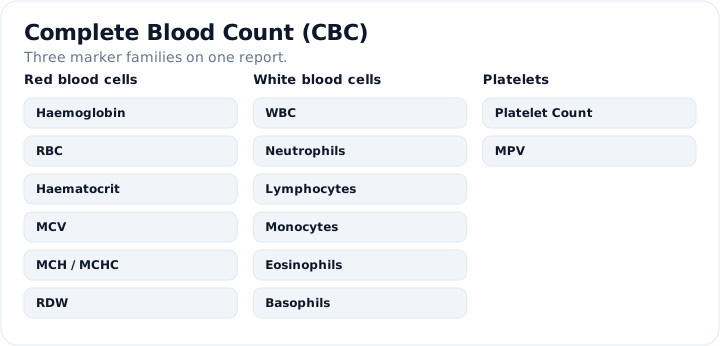
A complete blood count prints 15 numbers. Most people scan for H/L flags and miss the pattern. Here's the right order to read yours — and what the flags don't tell you.
Every number on a CBC belongs to one of three categories. Understanding the structure makes the individual values easier to read. (UK readers: this is the same test as a full blood count (FBC) — the marker names and thresholds below apply either way.)
Reading CBC results marker by marker misses the point. Here's the order that gives you the clearest picture.
The majority of non-trivial CBC findings fall into one of these patterns. Recognising the cluster saves you from over-interpreting individual numbers.
Low haemoglobin with small cells (low MCV) and high RDW is the classic iron deficiency picture. The low MCV reflects that cells are being made with insufficient iron, so they come out smaller than normal. The high RDW reflects that cells vary in size as iron depletion progresses — some cells made before iron ran low are still in circulation alongside smaller new ones.
A CBC alone can suggest iron deficiency but cannot confirm it — you need ferritin for that. Ferritin is the storage form of iron and drops before haemoglobin does. A person with low ferritin but normal haemoglobin has depleted iron stores but hasn't yet developed anaemia. That earlier stage is worth catching. If this pattern appears on a CBC, check ferritin before concluding on the cause or starting supplementation.
Low haemoglobin with large cells (high MCV, above 100 fL) is the hallmark of B12 or folate deficiency. B12 and folate are needed for DNA synthesis in dividing cells — without them, red blood cells can't divide properly and come out oversized. The bone marrow produces fewer of them, which is why haemoglobin falls. In severe deficiency, WBC and platelets can also drop, giving the appearance of a pancytopenia (all three cell lines affected).
Distinguishing B12 from folate deficiency requires serum B12 and folate levels — the CBC pattern is identical. Long-term metformin use depletes B12 by impairing absorption in the gut; this is a known drug-nutrient interaction that's easy to miss if no one checks. High MCV in someone with normal diet and no obvious deficiency risk can also indicate alcohol excess or hypothyroidism.
Elevated WBC with a neutrophil-dominant differential is the signature of bacterial infection, significant tissue injury, or systemic inflammation. If you had a CBC during an active infection, this pattern is expected and not concerning once the infection resolves. An elevated WBC that is predominantly lymphocytic points to viral infection instead — the differential is doing the work here, not the total WBC count alone.
An elevated WBC that persists after an apparent infection has resolved, or that lacks an obvious cause, warrants repeat testing and clinical review. The same applies to an elevated WBC in the 15–30 ×10⁹/L range without fever or other infection signs. This is not a pattern to interpret on your own — it warrants a conversation with a GP rather than a Google-based diagnosis.
A one-table summary to orient you before diving deeper into any specific marker.
| Marker | If low | If high | Check alongside |
|---|---|---|---|
| Haemoglobin | Anaemia — check MCV to find type | Polycythaemia — dehydration, sleep apnoea, or primary | MCV, RDW, ferritin |
| MCV | Microcytic: iron deficiency or thalassaemia | Macrocytic: B12/folate deficiency, alcohol, hypothyroidism | RDW, ferritin, B12 |
| RDW | Uniform cell size (normal) | Mixed cell sizes — iron deficiency or mixed deficiency | MCV, ferritin |
| WBC total | Leukopenia — viral suppression, medication, or bone marrow | Leukocytosis — infection, inflammation, or rarely haematological | Differential (neutrophils/lymphocytes) |
| Neutrophils | Low: viral infection, some medications, autoimmune | High: bacterial infection, tissue injury, steroids | WBC total, lymphocytes |
| Lymphocytes | Low: recent viral illness, steroid use, some immune conditions | High: viral infection, certain chronic conditions | WBC total, neutrophils |
| Eosinophils | Low: rarely significant | High: allergy, asthma, parasitic infection | Clinical context (symptoms, travel history) |
| Platelets | Thrombocytopenia — viral illness, medication, immune, or bone marrow | Reactive thrombocytosis — infection, iron deficiency, post-surgery | Hgb, WBC (look for multi-line involvement) |
References & Guidelines
FixFirst reads the full pattern across your CBC and the rest of your panel, ranks what needs attention, and explains what's driving it. 45 seconds, free, no account.
Analyse My Report Free